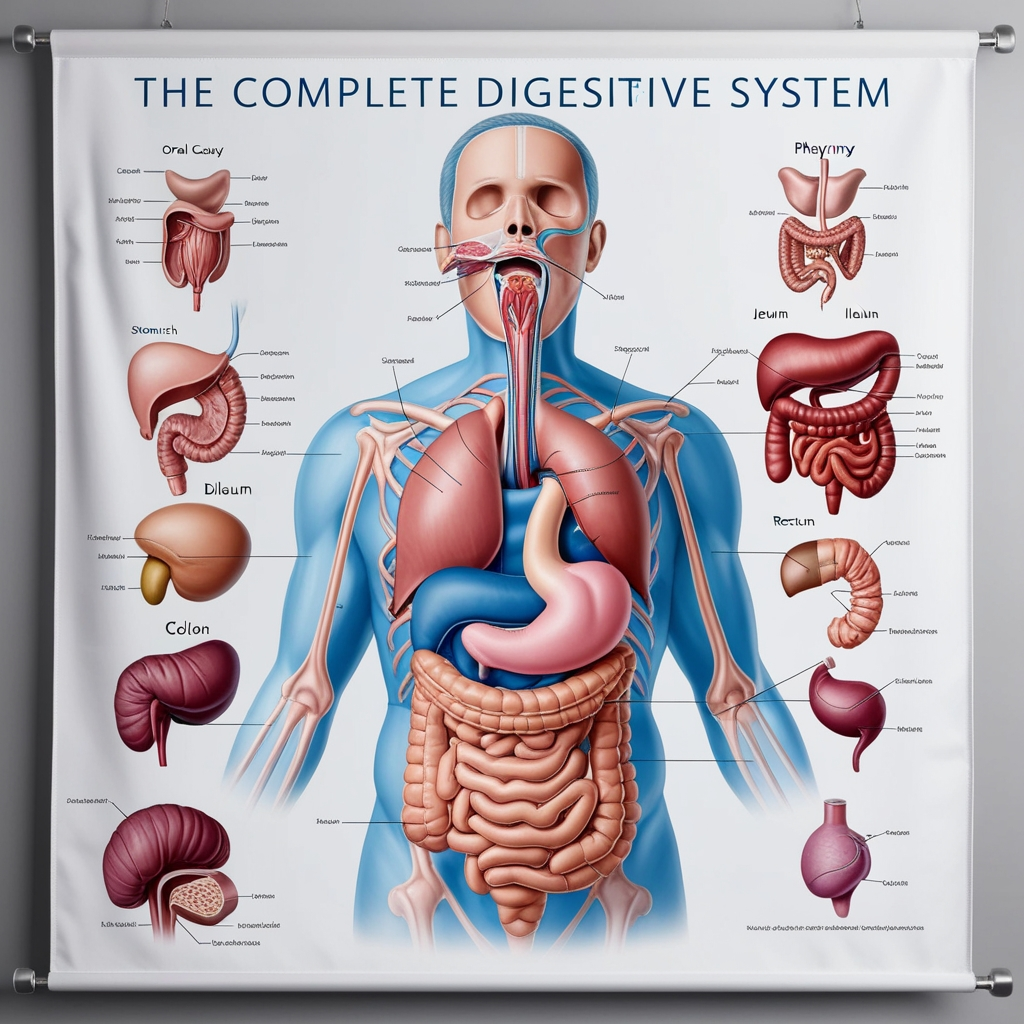
The digestive system is your body’s food processing plant, breaking down everything you eat into nutrients that fuel your cells, tissues, and organs. From the moment food enters your mouth to when waste leaves your body, this complex system works around the clock to keep you healthy and energized.
In this complete guide, you’ll learn exactly how the digestive system works, what each organ does, and why this process is essential for your survival.
What Is the Digestive System?
The digestive system is a group of organs working together to convert food into energy and basic nutrients that feed the entire body. This system includes a long, hollow tube called the gastrointestinal (GI) tract, plus several supporting organs like the liver, pancreas, and gallbladder.
The entire digestive process typically takes 24 to 72 hours from start to finish, depending on what you eat and your individual metabolism.
The Main Functions of the Digestive System
Your digestive system performs six essential functions:
- Ingestion – Taking food into the mouth
- Mechanical Digestion – Physically breaking down food into smaller pieces
- Chemical Digestion – Using enzymes to break down food molecules
- Absorption – Moving nutrients from the digestive tract into the bloodstream
- Motility – Moving food through the digestive tract via muscle contractions
- Elimination – Removing undigested waste from the body
The Journey of Food: Step-by-Step Breakdown
Step 1: The Mouth (Oral Cavity)
Time in Mouth: 5-30 seconds
Digestion begins the moment you take your first bite. Here’s what happens in your mouth:
- Teeth mechanically break down food through chewing (mastication)
- Salivary glands produce saliva containing the enzyme amylase
- Amylase begins breaking down carbohydrates into simple sugars
- Tongue shapes food into a ball called a bolus and pushes it toward the throat
Key Fact: Your mouth produces 1-1.5 liters of saliva every day, which not only starts digestion but also protects your teeth from bacteria.
Step 2: The Pharynx and Esophagus
Time in Esophagus: 5-10 seconds
After you swallow, the food bolus travels through:
- Pharynx (throat) – A muscular passage connecting the mouth to the esophagus
- Epiglottis – A flap of tissue that covers the windpipe to prevent choking
- Esophagus – A 25-centimeter muscular tube connecting the throat to the stomach
Peristalsis is the wave-like muscle contraction that pushes food down the esophagus. This process is so powerful you could swallow food while standing on your head.
The lower esophageal sphincter (a ring of muscle) opens to let food into the stomach and closes to prevent stomach acid from flowing back up.
Step 3: The Stomach
Time in Stomach: 2-6 hours
The stomach is a J-shaped, muscular bag that serves as a temporary food storage and processing center.
What Happens in the Stomach:
- Mechanical churning mixes food with digestive juices
- Gastric glands produce hydrochloric acid (HCl) and pepsin
- Hydrochloric acid kills bacteria and breaks down food structure
- Pepsin (an enzyme) begins breaking down proteins
- Mucus protects the stomach lining from acid damage
The stomach transforms the food bolus into a thick, acidic liquid called chyme. The pyloric sphincter then releases small amounts of chyme into the small intestine.
Important Note: Your stomach can hold 1-1.5 liters of food and liquid at a time.
Step 4: The Small Intestine
Time in Small Intestine: 3-6 hours
The small intestine is where most digestion and nutrient absorption occurs. Despite its name, it’s actually quite long—about 6-7 meters (20-23 feet).
The small intestine has three sections:
A. Duodenum (First Section – 25 cm)
This is where the serious chemical digestion happens:
- Pancreatic enzymes break down proteins, fats, and carbohydrates
- Bile from the liver (stored in the gallbladder) emulsifies fats
- Intestinal juices further break down food molecules
Key Enzymes at Work:
- Lipase (breaks down fats)
- Protease (breaks down proteins)
- Amylase (breaks down carbohydrates)
B. Jejunum (Middle Section – 2.5 meters)
The jejunum is the primary site for nutrient absorption:
- Villi – Tiny finger-like projections that increase surface area
- Microvilli – Even smaller projections on villi (creating a “brush border”)
- Capillaries absorb sugars, amino acids, vitamins, and minerals
- Lacteals (lymphatic vessels) absorb fats
Amazing Fact: The villi and microvilli create a surface area of about 250 square meters—roughly the size of a tennis court—all packed inside your abdomen.
C. Ileum (Final Section – 3.5 meters)
The ileum completes absorption and specializes in:
- Absorbing vitamin B12
- Absorbing bile salts for recycling
- Final absorption of remaining nutrients
Step 5: The Large Intestine (Colon)
Time in Large Intestine: 12-48 hours
After the small intestine extracts nutrients, the remaining material enters the large intestine (about 1.5 meters or 5 feet long).
What Happens in the Large Intestine:
- Water Absorption – The colon absorbs most remaining water from indigestible food matter
- Bacterial Fermentation – Trillions of beneficial bacteria (your gut microbiome) break down remaining materials
- Vitamin Production – Gut bacteria produce vitamins K and B vitamins
- Waste Formation – Indigestible material is compacted into feces
The large intestine has four main sections:
- Ascending colon (right side)
- Transverse colon (across the abdomen)
- Descending colon (left side)
- Sigmoid colon (S-shaped section leading to rectum)
Step 6: The Rectum and Anus
Final Storage and Elimination
The last stage of digestion involves:
- Rectum – Stores feces until elimination
- Anal sphincters – Control the release of waste
- Defecation – The process of eliminating solid waste
When the rectum is full, nerve signals trigger the urge to have a bowel movement.
The Supporting Organs: Behind-the-Scenes Heroes
While food doesn’t directly pass through these organs, they’re essential for digestion:
The Liver
The liver is your body’s largest internal organ and performs over 500 functions, including:
- Producing bile to break down fats
- Processing nutrients absorbed from the small intestine
- Detoxifying harmful substances
- Storing vitamins and minerals
The liver produces 800-1,000 ml of bile daily.
The Gallbladder
This small, pear-shaped organ:
- Stores and concentrates bile from the liver
- Releases bile into the duodenum when fatty foods are present
- Can hold 30-50 ml of bile
The Pancreas
The pancreas has two main functions:
Exocrine Function (Digestive):
- Produces digestive enzymes (lipase, protease, amylase)
- Secretes sodium bicarbonate to neutralize stomach acid
Endocrine Function (Hormonal):
- Produces insulin to regulate blood sugar
- Produces glucagon to raise blood sugar when needed
How Long Does Digestion Take?
The complete digestive process varies by individual and food type:
| Food Type | Approximate Digestion Time |
| Water | 10-20 minutes |
| Simple carbohydrates | 30-60 minutes |
| Complex carbohydrates | 2-3 hours |
| Proteins | 3-4 hours |
| Fats | 5-6 hours |
| High-fiber foods | Up to 24-48 hours |
Total Journey Time: 24-72 hours from mouth to elimination.
What Affects Digestive System Efficiency?
Several factors influence how well your digestive system works:
Factors That Support Healthy Digestion:
- Fiber-rich diet – Promotes regular bowel movements
- Adequate hydration – Helps break down food and prevent constipation
- Regular exercise – Stimulates intestinal muscle contractions
- Probiotic foods – Support beneficial gut bacteria
- Proper chewing – Reduces workload on stomach and intestines
- Stress management – Reduces impact on gut-brain connection
Factors That Impair Digestion:
- Eating too quickly – Doesn’t allow proper mechanical breakdown
- High-fat diet – Slows gastric emptying
- Chronic stress – Disrupts normal digestive processes
- Certain medications – Can affect gut motility
- Dehydration – Leads to constipation
- Sedentary lifestyle – Slows intestinal transit
Common Digestive System Problems
Understanding how digestion works helps you recognize when something’s wrong:
Gastroesophageal Reflux Disease (GERD)
- Stomach acid flows back into the esophagus
- Caused by weak lower esophageal sphincter
- Symptoms: heartburn, chest pain, difficulty swallowing
Irritable Bowel Syndrome (IBS)
- Affects large intestine function
- Symptoms: cramping, bloating, diarrhea, or constipation
- Triggered by stress, certain foods, or hormonal changes
Inflammatory Bowel Disease (IBD)
- Includes Crohn’s disease and ulcerative colitis
- Chronic inflammation of the digestive tract
- Requires medical management
Peptic Ulcers
- Open sores in stomach or duodenum lining
- Often caused by H. pylori bacteria or NSAID use
- Symptoms: burning stomach pain, bloating, nausea
Gallstones
- Hardened deposits in the gallbladder
- Can block bile ducts causing severe pain
- May require surgical removal
Constipation
- Fewer than three bowel movements per week
- Caused by low fiber, dehydration, or lack of exercise
- Usually treatable with lifestyle changes
The Gut-Brain Connection
Your digestive system contains over 100 million neurons—sometimes called the “second brain.” This enteric nervous system communicates constantly with your brain through the vagus nerve.
This connection explains why:
- Stress can cause stomach upset
- Anxiety often triggers diarrhea
- Gut bacteria may influence mood and mental health
- “Gut feelings” are more than just a metaphor
Tips for Optimal Health of Digestive System
Follow these evidence-based strategies to keep your digestive system running smoothly:
Dietary Recommendations:
- Eat 25-35 grams of fiber daily from fruits, vegetables, and whole grains
- Include probiotic foods like yogurt, kefir, sauerkraut, and kimchi
- Drink 8-10 glasses of water daily to aid digestion and prevent constipation
- Limit processed foods high in sugar and unhealthy fats
- Eat smaller, more frequent meals instead of large heavy meals
- Choose lean proteins that are easier to digest
Lifestyle Habits:
- Chew thoroughly – Aim for 20-30 chews per bite
- Exercise regularly – Even a 20-minute walk helps stimulate digestion
- Manage stress through meditation, yoga, or deep breathing
- Establish regular meal times to train your digestive system
- Don’t lie down immediately after eating – Wait 2-3 hours
- Get 7-9 hours of quality sleep – Sleep affects gut health
Fascinating Digestive System Facts
- Your digestive system processes about 50 tons of food in your lifetime
- The small intestine is the longest part of your digestive tract
- Your stomach gets a new lining every 3-4 days to prevent self-digestion
- You have about 100 trillion bacteria in your gut—10 times more than human cells
- The digestive system uses about 10% of your daily energy expenditure
- Your appendix may serve as a “safe house” for beneficial gut bacteria
When to See a Doctor
Consult a healthcare provider if you experience:
- Persistent abdominal pain lasting more than a few days
- Blood in stool or black, tarry stools
- Unexplained weight loss
- Difficulty swallowing
- Persistent heartburn despite medication
- Severe or persistent vomiting
- Chronic diarrhea or constipation
- Yellowing of skin or eyes (jaundice)
Conclusion
The digestive system is a remarkable biological machine that transforms the food you eat into the energy and nutrients your body needs to survive and thrive. From the moment food enters your mouth through the final elimination of waste, countless chemical and mechanical processes work in perfect harmony.
Understanding how your digestive system works empowers you to make better choices about what you eat, how you eat, and how to maintain optimal gut health. By following the tips outlined in this guide—eating fiber-rich foods, staying hydrated, managing stress, and exercising regularly—you can support your digestive system and improve your overall health.
Remember, your digestive health impacts everything from your energy levels to your immune function and even your mental well-being. Taking care of this essential system is one of the best investments you can make in your long-term health.
Test Your Knowledge
Ready to see how much you’ve learned about the digestive system? Take our interactive quiz to test your understanding and reinforce what you’ve discovered in this guide.
[Take the Digestive System Quiz →]